A calorie app that doesn't sell your data: what leaves, and what never does
In short
Read the sharing with third parties section of its privacy policy, and look at its business model. At Radish, the answer is one checkable sentence: no data is ever sold, and the one thing that leaves (AI analysis, on your action) serves only to estimate your meal.
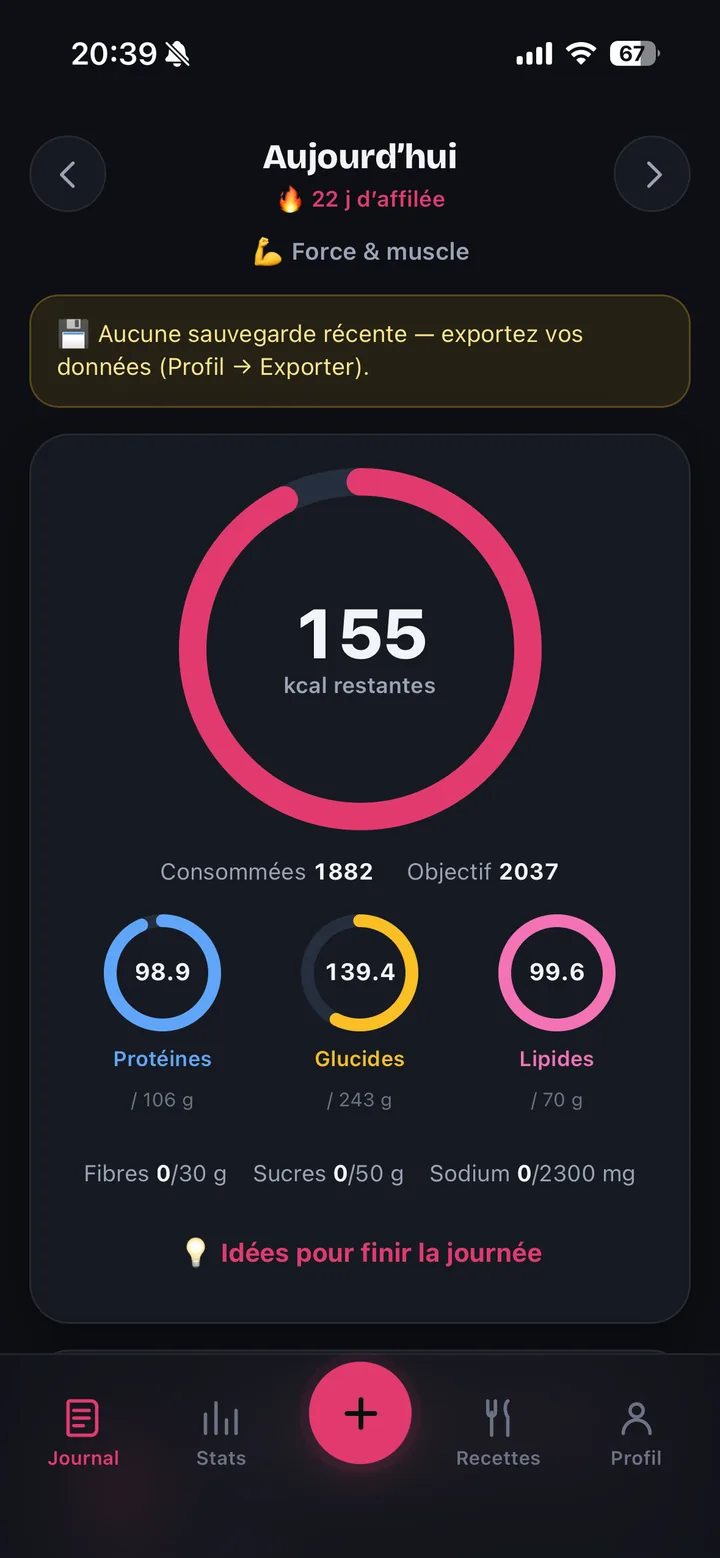
A calorie app that doesn't sell your data can be claimed two ways: "trust us," or a detailed account of exactly what leaves your phone, when, and why. The first asks you to take it on faith. The second can be checked. We chose the second. Here's what never moves at Radish, the exceptions that exist, and how to turn them off if you'd rather skip them.
"Free": so who's paying?
A calorie app costs money to run: servers, a food database, a team. If you're paying nothing, that money comes from somewhere else. Most free apps live off ads and off your data — and your food diary is a goldmine: your weight, your goals, your meal times, your slip-ups. This is personal health data, among the most sensitive there is. We've broken down what calorie apps really know about you; the summary fits in one sentence: when it's free and everything goes to a server, you're the product.
And even paying doesn't fix everything. MyFitnessPal put barcode scanning behind its Premium subscription: the model squeezes you on one side (your data) and the other (your wallet).
What stays on your phone
Your food diary, your weight, your history, your goals, your settings: your diary stays on your phone — never sent to our servers (except AI or barcode scanning, if you use them) — that's the overwhelming majority of the data, the part that matters most, and it doesn't move. Two features you trigger yourself do send something out: scanning an unknown barcode queries Open Food Facts, and the optional AI assistant receives the meal you describe. Anonymised usage statistics are also sent to Google (in the EU, only if you agree); your diary, foods and weight never are. No account, no ID, no cloud copy, so nothing to cross-reference with other records, nothing that can leak from a server that doesn't exist for this data. The full list of what stays on your phone with a calorie tracker that has no account is documented, exception by exception. An app that demands an account before it lets you log an apple has a reason for that — and it isn't your convenience.
The exceptions: AI, barcode scanning, usage statistics
Two features break this rule, and we'd rather say so plainly than bury it. Anonymised usage statistics are also sent to Google (in the EU, only if you agree); your diary, foods and weight never are.
AI meal analysis: when you choose to describe a meal by text or photo so the app can estimate its calories and macros, that text or photo is sent to our server function, which immediately relays it to our AI provider for analysis — without keeping it. Three things worth knowing:
- It only triggers when you use it — never automatically, never in the background.
- It requires your explicit consent, asked for before the first use.
- You can turn it off or revoke consent at any time in settings, and keep using Radish normally — search, barcode scan, manual entry — without ever touching it.
Barcode scanning: when a product isn't in the app's built-in database, the scanned code is sent to the open Open Food Facts database (a third party, not our servers) to retrieve its nutrition values. No other profile data is attached to it, and you can always enter a food by hand to avoid it.
The rest of the app — diary, weight, goals, history — never needs either feature to work.
Try Radish for freeYour diary stays on your phone — never sent to our servers (except AI or barcode scanning, if you use them). No account, counting without a connection, Nutri-Score. Zero ads, zero telemetry.Get Radish →What we never do
No account. No advertising profile. No third-party trackers. And above all: no selling your data, to anyone — that hasn't changed and won't. The data that leaves your phone, on your own action (AI meal analysis, barcode scanning), serves exactly one purpose: getting you an answer. It is never sold and never used for ad targeting.
With most other apps: everything transits, account required
Many calorie apps require an account from install and continuously sync your diary, weight and goals to their servers, AI or not. Radish is the opposite: what leaves the phone is optional, one-off and under your control — the honest exception, not the norm.
Radish applies this principle end to end. The core is free: Nutri-Score, macros and 11 vitamins and minerals from public reference databases (CIQUAL/USDA): counting, recipes and Nutri-Score work without a connection. The funding? An optional Pro with a one-time payment, not a subscription, for advanced features. Either you're the customer, or you pay nothing — but you're never the merchandise.
4 privacy checks before installing a calorie app
- Account required? If you can't do anything without an email, your data is going somewhere.
- Does it work in airplane mode? A locally stored food log works with no network. Test it — it takes seconds.
- Where does the money come from? Ads, "partners", subscription, one-time payment: the visible business model tells you everything.
- Where is the data stored? "On your device" and "on our secure servers" are not the same promise.
- If the app offers AI, does it say what it sends? A transparent app spells out what, to whom, when, and how to opt out. Silence on this is a signal.
If you're coming from MyFitnessPal and want a point-by-point comparison, we wrote the guide to the free alternative.
FAQ
How do I know if a calorie app sells my data?
Read the "sharing with third parties" section of its privacy policy, and look at its business model. At Radish, the answer is one checkable sentence: no data is ever sold, and the one thing that leaves (AI analysis, on your action) serves only to estimate your meal.
Does AI meal analysis send my data to a third party?
Yes, but only the text or photo of the meal you choose to analyze, sent to our AI provider after your explicit consent. That data is never sold or used for advertising, and you can turn the feature off anytime in settings.
Can I use Radish without ever turning on AI?
Yes. Search, barcode scanning and manual entry all work without ever calling the AI: it's an add-on feature, not a requirement.
Can an app be free without exploiting my data?
Yes, if its funding comes from somewhere else. Radish is free for the essentials and is funded by an optional Pro with a one-time payment — not by ads or your data.
Do I need an account to count calories?
No. Radish works with no account and no email: you open the app and start. With no ID, your data can't be cross-referenced with anything.
What happens to my data if I delete the app?
With Radish, your diary, weight and history are never sent to our servers (except AI or barcode scanning, if you use them): if you delete the app, they go with it. No copy lingers on a server.
Is my nutrition data health data?
Your food diary reveals your weight, your goals and your habits: that's sensitive personal data. All the more reason for your diary to stay on your phone — never sent to our servers (except AI or barcode scanning, if you use them), AI aside.
A calorie app that doesn't sell your data isn't a promise you're asked to take on faith: it's a checkable list of what leaves your phone, when, and how to turn it off. Radish is built that way. Open it, log your first meal without ever touching AI, and check for yourself: airplane mode on, it works exactly the same.
General information, not medical advice. Third-party app prices and features are cited for reference and may change.
Ready to try Radish?Private calorie counter, Nutri-Score, no ads. Free.Get Radish →Prefer the installed app? Get Radish on iPhone or Android →